Region guide
Alps Motorcycle Touring: Passes, Seasons and Route Planning
The Alps are the benchmark against which every other mountain-riding region is measured: hundreds of engineered passes across five main touring countries, linked into routes that riders plan for years. This guide covers the named passes worth the detour, when they open, and how to plan an Alpine tour that actually flows.

By Ben Crawford, Co-founderUpdated 19 October 2026
The numbers worth knowing
The key figures behind this guide, from riders and operators across the marketplace.
Browse all tripsKey takeaways
- The Alps span eight countries — including France, Italy, Switzerland, Austria, Germany, and Slovenia — with hundreds of passes linked into multi-country routes.
- The high passes are reliably open mid-June to September; the Stelvio tops out at 2,757 m.
- Plan a realistic Alpine day at 200–300 km — the passes are slow going.
Alpine and mountain motorcycle trips
View all →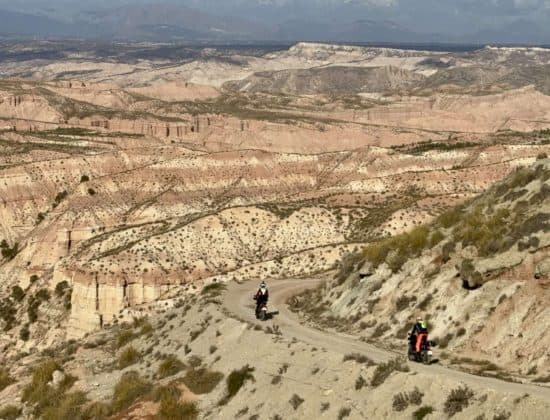 Adventure Touring
Andalusia East Motorcycle Tour Off Road
Andalusia, Spain
Nov 6 – 11 · 6 days · Aries Moto Tours
€1,490 / person
 Road Touring
The Ultimate Gourmet Tour
Andalusia, Spain
Dates on request · 8 days · Gourmet Biker Tours
€4,366 / person
 Road Touring
The Signature Gourmet Tour
Andalusia, Spain
Dates on request · 8 days · Gourmet Biker Tours
€3,021 / person
The headliners
The named passes worth planning a route around
A handful of passes define Alpine touring, and building a route around a few of them is how most great trips start. The Stelvio, in the Italian Alps, is the one everybody knows: 48 hairpins on its northern approach climbing to 2,757 metres, spectacular and correspondingly busy — ride it early in the day. Nearby, the Gavia and Mortirolo are narrower, quieter, and arguably better riding. Over in Austria, the Grossglockner High Alpine Road is a toll road of extraordinary engineering, sweeping to 2,500 metres past a glacier; it is a maintained tourist route rather than a wild pass, but the surface and the scenery are worth the entry fee.
France contributes the highest paved pass in the range — the Col de l’Iseran (2,764 m) — along with giants like the Col du Galibier, strung together by the Route des Grandes Alpes, a signposted itinerary of around 685 km from Lake Geneva to the Mediterranean that is the closest thing the Alps have to a grand tour. Switzerland ties it all together with the Furka, Susten, and Grimsel passes, three roads that can be ridden as a single sublime day. And the Dolomites, in Italy’s north-east, are a world of their own: the Sella Ronda circuit links four passes around the Sella massif in a loop you can ride before lunch and immediately want to ride again.
You cannot ride them all in one trip, and trying is the classic beginner’s mistake. Pick a base — the Dolomites, the Swiss central passes, or the French Grandes Alpes — and ride it well rather than chasing a checklist across the whole range.


Timing
When the Alpine passes open — and close
The single most important fact about Alpine touring is that the high passes are seasonal, and getting the timing wrong turns a dream route into a locked gate. As a rule, the highest passes open from late May or June and close again in October or November, with exact dates decided each year by snow rather than the calendar — a heavy winter can keep the Stelvio shut into late June, while a mild autumn leaves the Grimsel open past Halloween. Never assume; the tourist boards and pass-status websites publish live opening information, and it is worth checking within days of departure.
July and August are the safe months for guaranteed access, but they are also the busy ones — the famous passes carry heavy tourist traffic, cyclists in packs, and camper vans that turn a flowing descent into a queue. The shoulder weeks are worth planning around: mid-to-late June, when the passes have just opened and the peaks still hold snow, and September, when the traffic thins, the air sharpens, and the light turns golden. Early and late in the season, carry warm and waterproof layers regardless of the valley forecast — a sunny 25°C start can become sleet at 2,500 metres within the hour.
Weather in the Alps is genuinely mountain weather: fast-moving, localised, and unforgiving of the underdressed. Thunderstorms build on summer afternoons, so many riders tackle the big passes in the morning and are down in the valley by the time the sky darkens. A cheap set of packable waterproofs and a warm mid-layer live permanently in an Alpine tourer's luggage for exactly this reason — the weather owes you nothing at 2,500 metres.

Before you ride a high pass
A short discipline that keeps Alpine days safe and flowing.
- Check live pass-opening status within days of departure
- Pack warm and waterproof layers regardless of the valley forecast
- Ride the big passes in the morning, before afternoon storms build
- Start with a full tank — fuel is sparse above the valleys
- Watch for cyclists, camper vans, and gravel on the inside of bends
- Carry a toll payment method for roads like the Grossglockner
- Know your descent — long passes mean long, brake-heavy downhills
Planning
Routing an Alpine tour across borders
The Alps span five main touring countries, and the open Schengen borders mean a good route ignores them entirely — a single day can start in Italy, cross into Switzerland over a pass, and finish in Austria without a document check. That freedom is the point, but it does mean a little cross-border admin homework. Switzerland and Austria both require a motorway vignette (Switzerland’s is annual and sold online or at the border; Austria’s comes in short-duration options), though the scenic passes themselves are usually toll-free apart from showpiece roads like the Grossglockner. France’s certified-glove rule applies the moment you cross in, and Italy’s ZTL town-centre zones catch out riders who roll into a historic centre for lunch. Our riding-laws guide covers the per-country details.
For distances, resist ambition. Alpine passes are slow — a 200 km day on paper can be six hours of concentration on the road, and that is before the photo stops the scenery demands. Two hundred to three hundred kilometres is a full, satisfying Alpine day; plan more and you spend the trip watching the clock instead of the view. Base yourself somewhere central to a cluster of passes rather than moving hotel every night, and you trade packing time for riding time.
Many of the best Alpine tours are run by operators who have ridden these roads for decades — they know which pass is resurfaced this year, which refuge does lunch for a group, and which valley to duck into when a storm rolls in. Whether you ride it guided, self-guided, or independently, the Alps reward planning more than almost any region on earth.

Planning an Alpine tour in four steps
Pick one base region
The Dolomites, the Swiss central passes, or the French Grandes Alpes — choose one cluster and ride it well rather than chasing the whole range. A central base beats a new hotel every night.
Time it to the passes
Aim for mid-June to September. July–August guarantees open passes but brings traffic; the shoulder weeks give quieter roads. Check live pass-opening status within days of leaving.
Sort the cross-border admin
Swiss and Austrian vignettes, France’s glove rule, Italy’s ZTL zones, and pass tolls like the Grossglockner. Five minutes per country beats one expensive surprise — see the riding-laws guide.
Plan short, ride slow
200–300 km is a full Alpine day once you count the hairpins and the photo stops. Ride the big passes in the morning, be in the valley before the afternoon storms, and leave time for the views.
Frequently asked questions
The questions riders ask most before booking.
Keep reading

When to go
The Best Time of Year for a Motorcycle Tour, Region by Region
Timing a tour well makes an enormous difference — the same road is a different holiday in June and in November. This guide maps the riding calendar across Europe’s touring regions, the Alpine pass season, and the winter destinations that keep the riding year open.

Route planning
Motorcycle Route Planning: Tools, Tactics and Roads Worth the Detour
A well-planned route is the difference between a good trip and an unforgettable one. This guide covers the apps and tools serious tourers actually use, how to pace daily distances realistically, the roads worth building a whole trip around, and how to plan for the days that don’t go to plan.
About the author
Ben Crawford
Co-founder
Ben Crawford is a co-founder of Motorcycle Holiday: a software nut by day and an adventure rider at heart. He builds the site that helps riders find the right tour.