When to go
The Best Time of Year for a Motorcycle Tour, Region by Region
Timing a tour well makes an enormous difference — the same road is a different holiday in June and in November. This guide maps the riding calendar across Europe’s touring regions, the Alpine pass season, and the winter destinations that keep the riding year open.

By Ben Crawford, Co-founderUpdated 4 July 2026
The numbers worth knowing
The key figures behind this guide, from riders and operators across the marketplace.
Browse all tripsKey takeaways
- The broad European touring season runs April–October, with June and September the sweet-spot months almost everywhere.
- The high Alpine passes are reliably open only from June to October.
- With the right destination choices, riding is possible 12 months a year.
Departures across the season
View all (9) →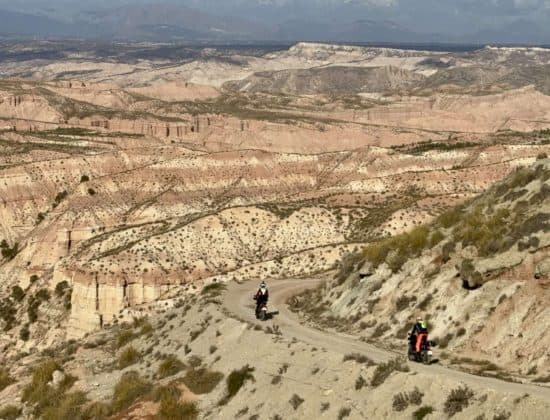 Adventure Touring
Andalusia East Motorcycle Tour Off Road
Andalusia, Spain
Nov 6 – 11 · 6 days · Aries Moto Tours
€1,490 / person
 Road Touring
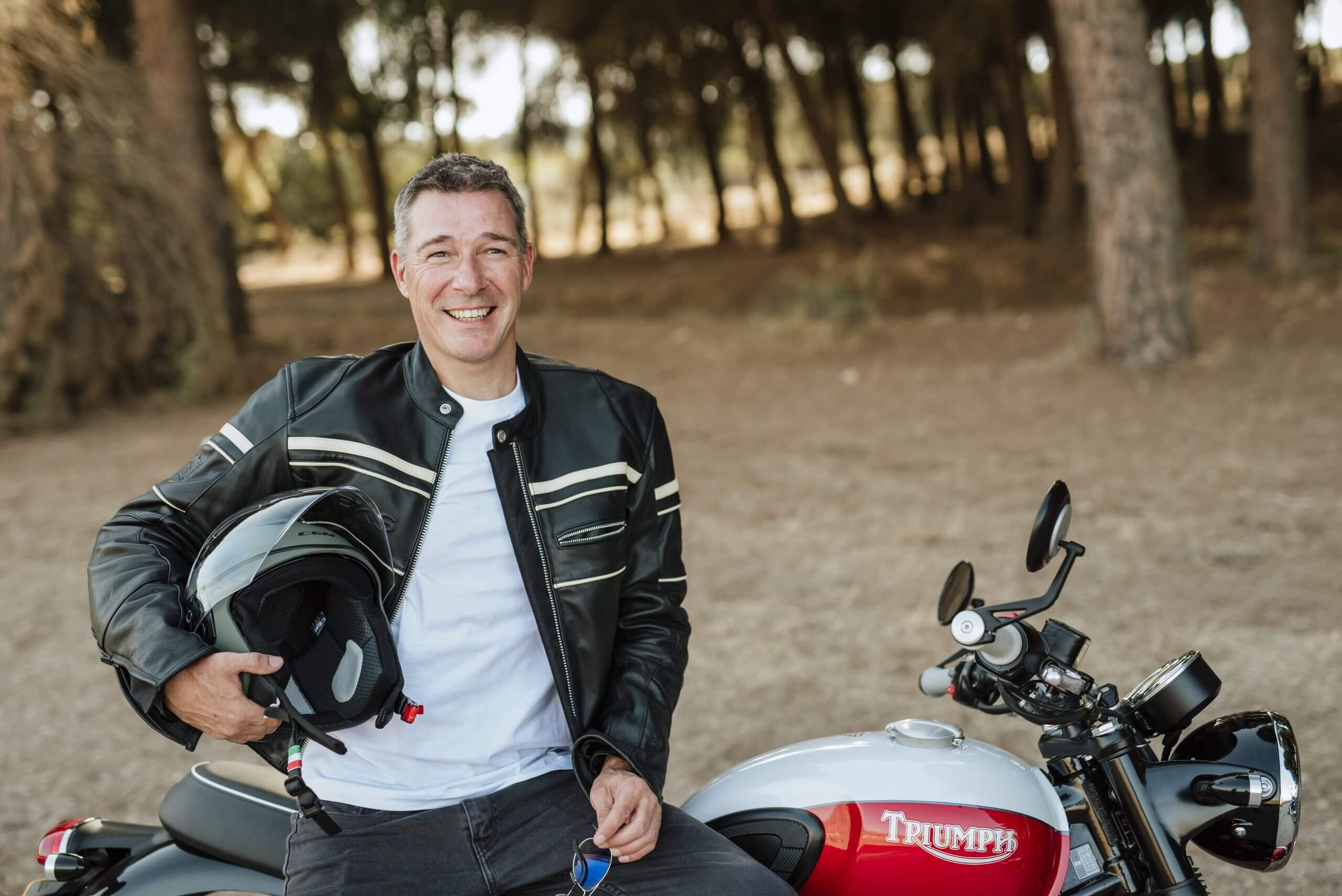
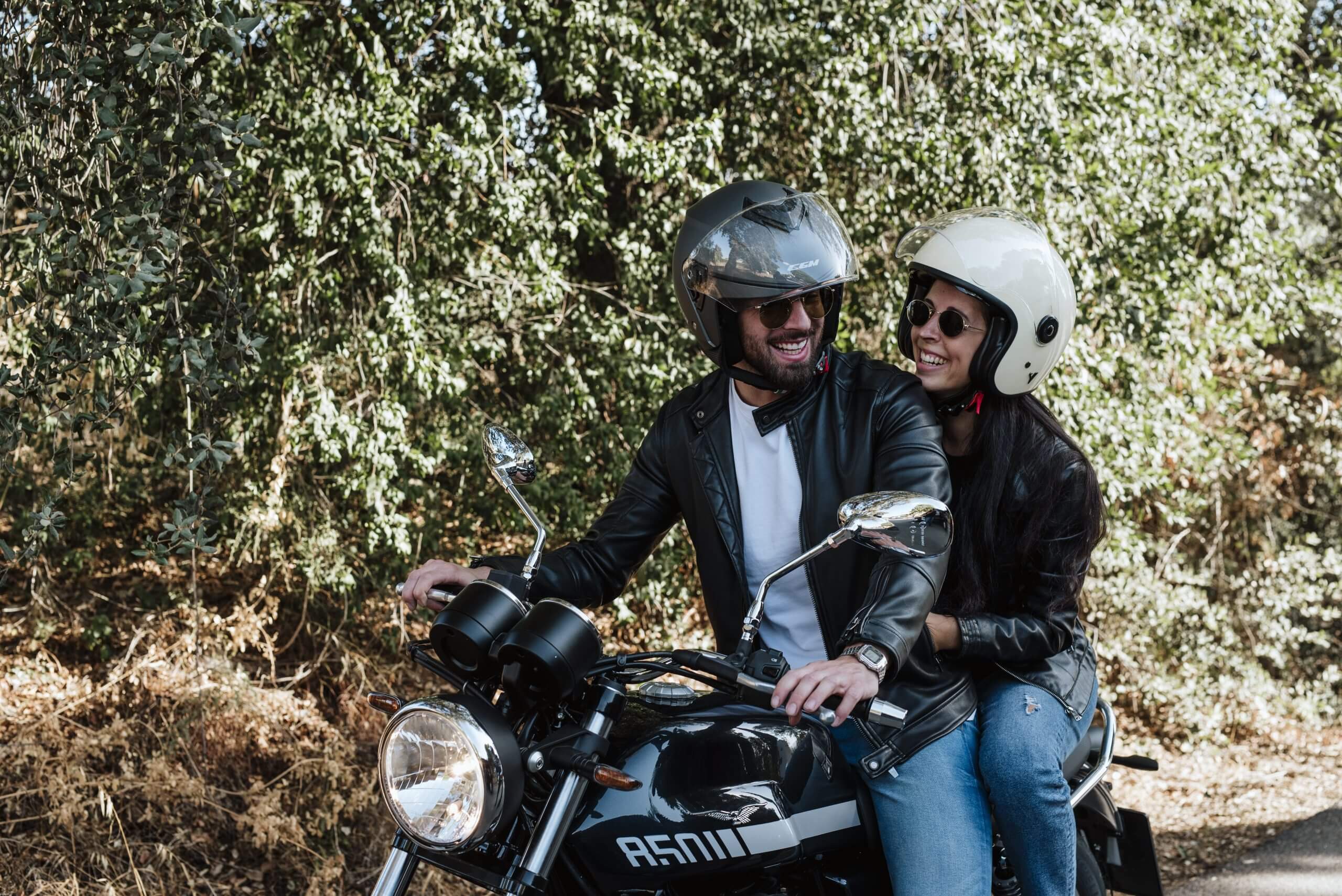
The Ultimate Gourmet Tour
Andalusia, Spain
Dates on request · 8 days · Gourmet Biker Tours
€4,366 / person
 Road Touring
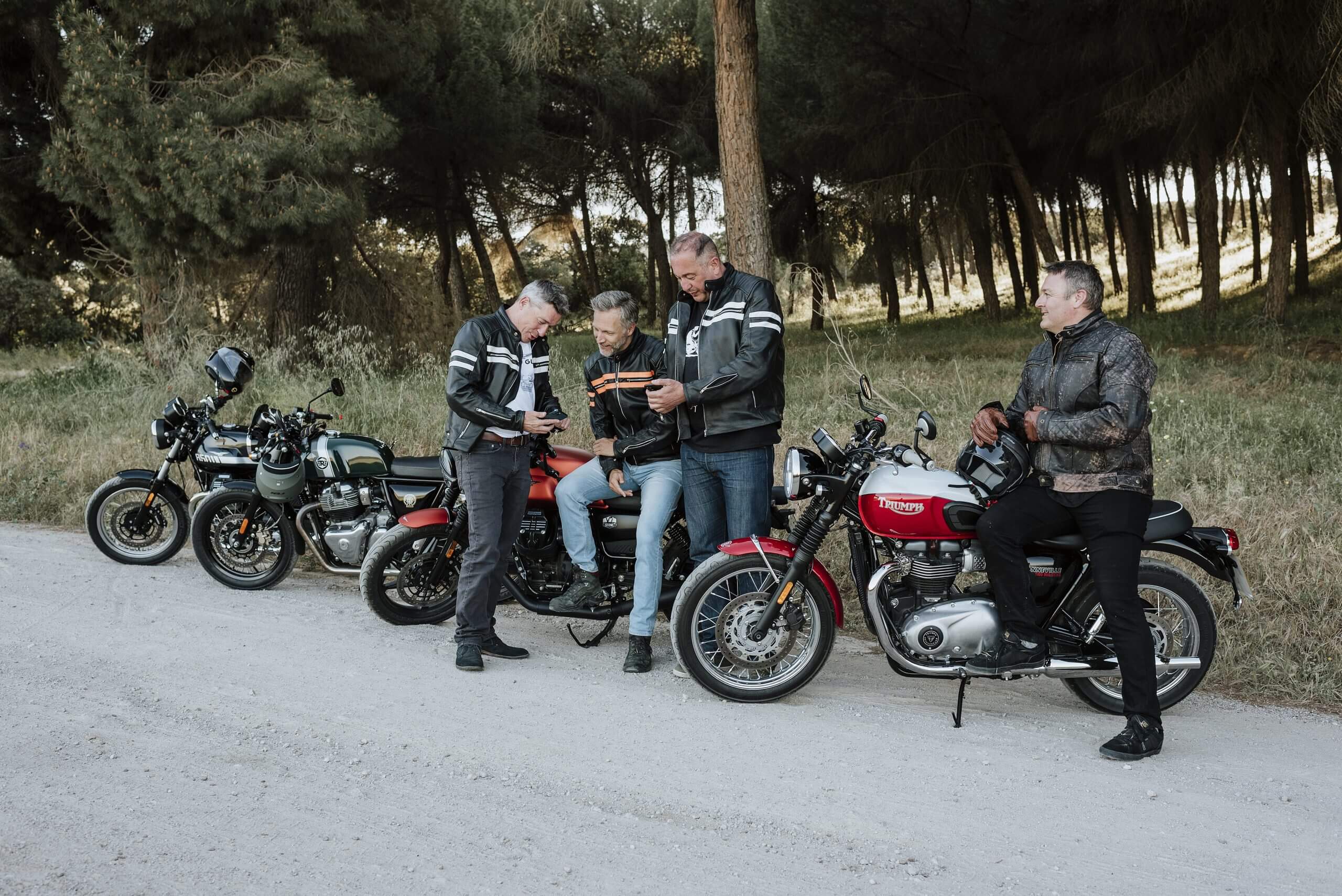
The Signature Gourmet Tour
Andalusia, Spain
Dates on request · 8 days · Gourmet Biker Tours
€3,021 / person
 Road Touring
Grand Andalusia
Andalusia, Spain
Dates on request · 9 days · Aries Moto Tours
€2,990 / person
The big picture
The European motorcycle touring season, month by month
Europe’s touring season broadly runs April to October, but the phrase hides the detail that makes or breaks trips. The season opens from the south: Andalusia, southern Portugal and Sicily are genuinely spring-like by March, while the Alps are still under snow and northern Europe is still an exercise in heated grips. April and May in Iberia are close to perfect — wildflowers, green hillsides that will be brown by August, mild temperatures and roads empty of holiday traffic. This is when riders who know the calendar take their first big trip of the year.
June is the first month the whole continent works at once: the high passes open, Scotland hits its long-daylight stride, and the Mediterranean is warm without being punishing. It shares the crown with September, and the two make the same offer — peak conditions without peak crowds. Riders who can travel outside the school holidays should, every time.
July and August deliver the most reliable weather and the least reliable everything else: coastal roads clogged with holiday traffic, accommodation at annual maximums and booked out weeks ahead, and southern interior temperatures that turn full riding kit into a sauna. The heat is a genuine riding factor — inland Spain and Greece routinely pass 38°C, which is fatigue-and-judgement territory, not just discomfort. If August is when you can go, go north: Scandinavia, the Baltics and the Scottish Highlands are at their absolute best.
October closes the mainland season gracefully — southern Europe stays warm enough for excellent touring through the month, with autumn colour thrown in — before November hands the riding year to the winter destinations. The tactical summary: match the month to the region rather than forcing a region into the wrong month, and the continent gives you eight strong touring months from Porto to the North Cape.


High ground
Alpine pass season: when the great mountain roads actually open
The Alps run on their own calendar, and it is stricter than riders expect. The legendary high passes — Stelvio at 2,757 metres, Grossglockner, Gavia, the Furka–Grimsel–Susten circuit — are closed by snow for more than half the year, typically opening between late May and mid-June and closing again with the first serious October storms. "Open" carries an asterisk in the shoulder weeks: a June morning on the Stelvio can mean snowbanks taller than the bike lining a dry road, dazzling and cold, and a September cold front can shut a pass overnight before reopening it two days later.
June to September is therefore the honest Alpine window, and each month has a personality. June pairs open passes with melting-snow waterfalls and green valleys, at the price of the odd late closure and gravel washed onto high corners. July and August guarantee the tarmac but share it — the famous passes draw coaches, cyclists, supercars and camper vans in industrial quantities, and the Stelvio at noon in August is an experience closer to queueing than cornering. The professionals’ answer is timing: on the road by eight, the marquee pass done before ten, and the afternoon spent on the equally magnificent second-tier passes the coaches skip — Timmelsjoch over Ötztal, the Bernina, Vršič across the Julian Alps.
September is the connoisseur’s month: crowds gone, air clear, larch forests turning gold, passes still reliably open until the month’s end. Many Alpine operators run their favourite departures in the first half of September for exactly this reason.
Whatever the month, mountain weather remains a daily variable, not a seasonal one. Valley 25°C can be summit 6°C; afternoon thunderstorms build fast in high summer; and pass-status pages — Switzerland’s TCS, the Italian and Austrian provincial road services — are a nightly two-minute ritual for anyone touring above 2,000 metres. Pack the warm layer in June. Every Alpine veteran has a story about the rider who didn’t.
Winter riding
Winter motorcycle touring: Morocco and the year-round south
When Europe’s season closes, the riding year does not — it moves south, and the flagship winter destination is Morocco. From October to April the country offers what nowhere in Europe can: reliably warm, dry touring weather across genuinely world-class terrain — the Tizi n’Tichka and Tizi n’Test passes over the High Atlas, the gorges of the Dades and Todra, and the palm-fringed run to the Saharan dunes at Merzouga. Winter is not merely acceptable there; it is the correct season. Summer pushes the south past 45°C, which is why the Moroccan touring calendar inverts Europe’s completely. The refinements: High Atlas passes above 2,000 metres get cold and occasionally snowy in deep winter, so December–January itineraries stay flexible, while October–November and February–April are the effortless months — and spring adds blossom and green valleys to the postcard.
Closer to home, the Canary Islands are Europe’s only true year-round venue: volcanic mountain roads, 20-something temperatures in January, and enough variety across the islands to fill repeat trips. Andalusia and southern Portugal manage genuine winter touring in most years — 15–18°C January afternoons around Ronda or the Algarve hills — with the caveat that you are playing weather roulette; a wet Atlantic week is always possible. Sicily, Crete and Cyprus run the same pattern in the eastern basin.
Further afield, the northern winter is high season across much of the touring world: Thailand and Vietnam from November to February, South Africa’s Cape and Garden Route from November to March, Chile and Argentina through the southern summer. The long-haul flight buys perfect weather and a profoundly different riding culture.
The planning takeaway is a happy one: there is no off-season, only wrong destinations for the month in hand. Riders who think in terms of a twelve-month calendar — Alps in September, Morocco in February, Andalusia in November — simply get more touring per year than riders who park the bike at Halloween.


The smart money
Shoulder-season strategy: how experienced riders time their tours
Once the regional calendars are understood, a strategy emerges, and it is the one experienced tourers quietly follow: live in the shoulders. May–June and September–October deliver eighty per cent of peak season’s weather with twenty per cent of its friction — hotel prices down a tier, marquee roads running free, restaurants with tables, ferries with deck space, and locals with time to talk. The riding itself is better too: cool mornings, clear light, and none of the heat management that turns August afternoons in the south into an endurance discipline.
The shoulder seasons do demand slightly more from the planner. Weather variance is real — a May week in the Picos can be glorious or soggy, and September in the Alps carries the first pass-closure risk — so shoulder-season routes want built-in alternatives and a wardrobe that covers fifteen degrees of range. The trade is overwhelmingly worth it, and it is precisely what operators design for: scan any quality operator’s calendar and watch the departures cluster in June and September. That clustering is professional judgement made visible, and it is worth copying.
Booking rhythm matters more than most riders realise. Peak-season and marquee-route departures — the Alps in July, the NC500 in summer, Morocco over Christmas — genuinely sell out months ahead, so the popular wisdom of booking four to six months out holds there. Shoulder departures breathe more, and late deals appear when groups have space; flexible riders can do very well at six weeks’ notice in May or late September.
And a final calibration: daylight. June’s late sunsets make even a delayed day relaxed; those gorgeous October afternoons in the south end abruptly at seven. Shoulder-season itineraries should finish their riding an hour earlier than summer ones — which, conveniently, is exactly the excuse the terrace and the view were waiting for. Time the trip well and the destination does the rest.
The touring year at a glance
Europe: April to October
The European touring season broadly runs April–October, with peak conditions in May–June and September. July–August is warm but brings heavy tourist traffic. Spring in southern Europe is exceptional — quiet roads, lush landscapes, and comfortable temperatures.
Mountain passes: June to September
High Alpine passes (Stelvio, Galibier, Furka) typically open in June and close by late October. Snow can fall at altitude from September onwards. Check pass status before planning a mountain route in shoulder months — the TCS site in Switzerland is reliable.
Morocco and North Africa: October to April
The Saharan regions of Morocco are best visited October–April when temperatures are manageable. Summer pushes past 45°C in the south, making riding uncomfortable. Spring (February–April) sees wildflowers in the valleys and is particularly beautiful.
Southeast Asia and the tropics
Touring in Southeast Asia depends on the monsoon cycle. Northern Thailand and Vietnam are best October–March; Bali and Indonesia from April–September. Research the wet and dry seasons for each specific country before booking — they vary significantly by region.
Frequently asked questions
The questions riders ask most before booking.
Keep reading

Route planning
Motorcycle Route Planning: Tools, Tactics and Roads Worth the Detour
A well-planned route is the difference between a good trip and an unforgettable one. This guide covers the apps and tools serious tourers actually use, how to pace daily distances realistically, the roads worth building a whole trip around, and how to plan for the days that don’t go to plan.

Beginners guide
Your First Motorcycle Holiday: The Complete Beginner’s Guide
Thinking about your first motorcycle holiday? This guide covers everything a first-timer needs — how to choose a beginner-friendly tour, what it costs, how booking works, and what the support around you actually looks like — so you can book with confidence.

Your first tour
What to Expect on a Motorcycle Tour: An Honest Day-by-Day Picture
Not sure what a motorcycle holiday actually looks like day to day? Here’s the honest picture — the morning briefings, the riding rhythm, the people you’ll share it with, the evenings, and what really happens when a bike gets a flat halfway up a mountain.
About the author
Ben Crawford
Co-founder
Ben Crawford is a co-founder of Motorcycle Holiday: a software nut by day and an adventure rider by dream. He builds the site that helps riders find the right tour.