Your first tour
What to Expect on a Motorcycle Tour: An Honest Day-by-Day Picture
Not sure what a motorcycle holiday actually looks like day to day? Here’s the honest picture — the morning briefings, the riding rhythm, the people you’ll share it with, the evenings, and what really happens when a bike gets a flat halfway up a mountain.

By Ben Crawford, Co-founderUpdated 4 July 2026
The numbers worth knowing
The key figures behind this guide, from riders and operators across the marketplace.
Browse all tripsKey takeaways
- A typical touring day is 4–6 hours of riding broken up by stops, rolling out around 9–10 am and reaching the hotel by mid-afternoon.
- Guided groups usually run 8–12 riders.
- Days open with a briefing, and operator support handles the moments when a bike has a problem.
Guided motorcycle holidays that handle everything
View all (9) →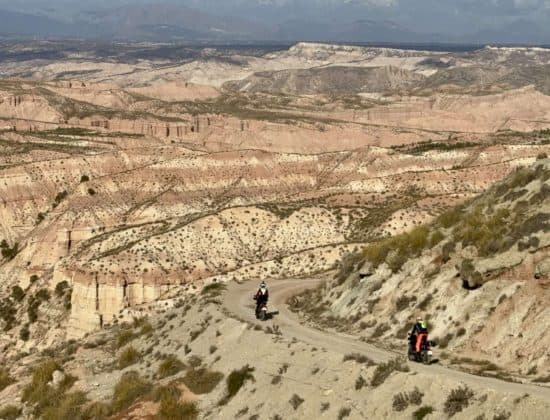 Adventure Touring
Andalusia East Motorcycle Tour Off Road
Andalusia, Spain
Nov 6 – 11 · 6 days · Aries Moto Tours
€1,490 / person
 Road Touring
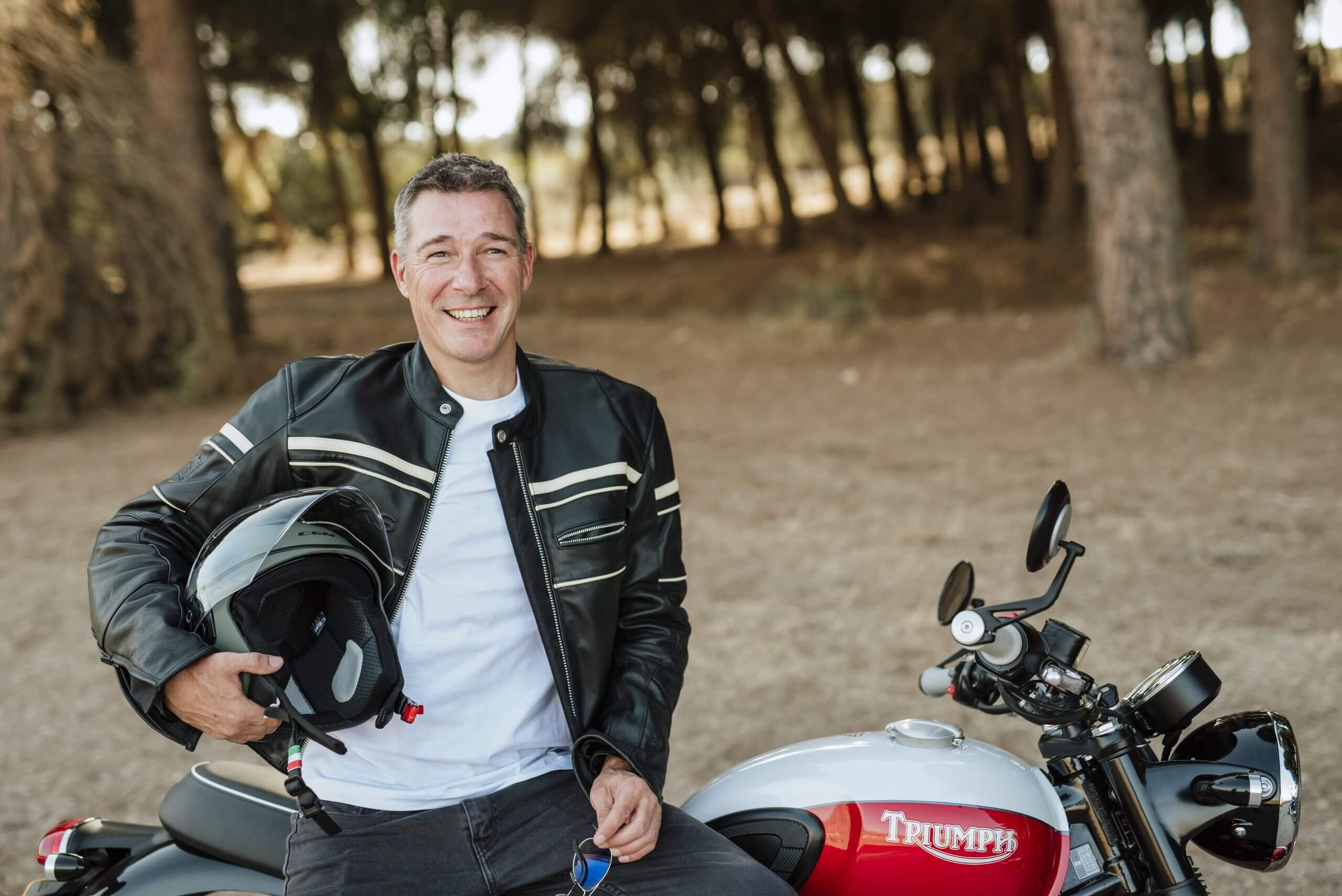
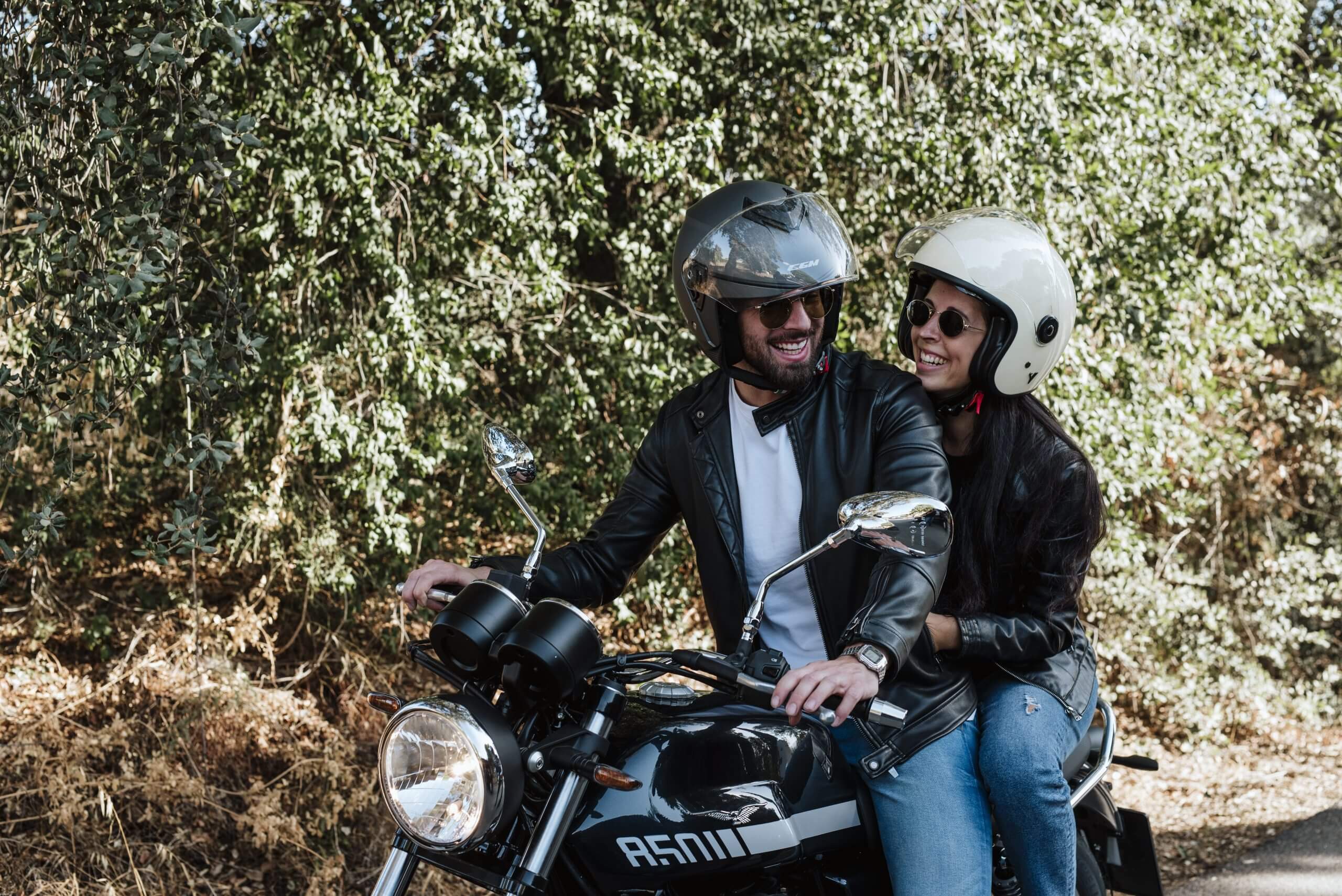
The Ultimate Gourmet Tour
Andalusia, Spain
Dates on request · 8 days · Gourmet Biker Tours
€4,366 / person
 Road Touring
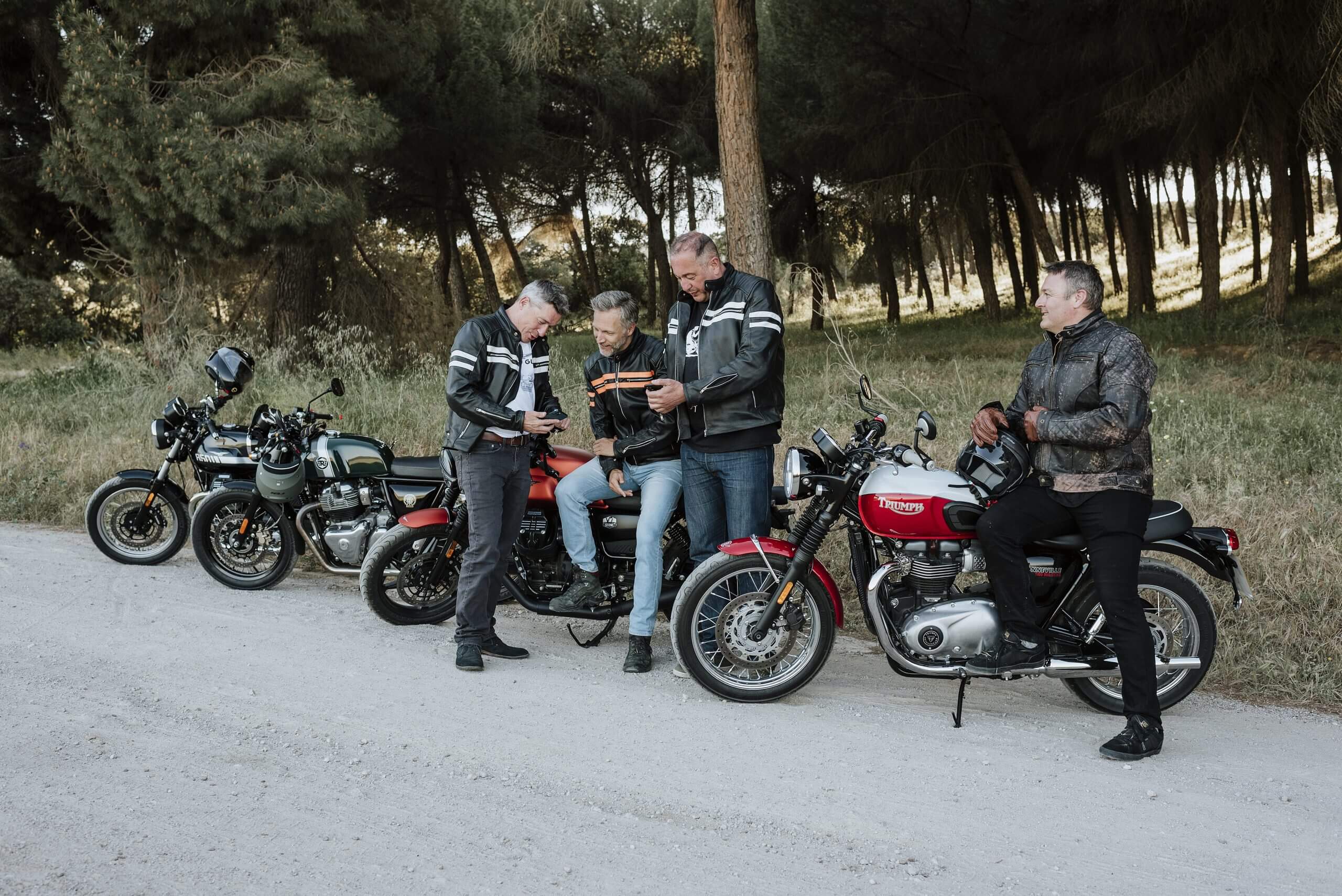
The Signature Gourmet Tour
Andalusia, Spain
Dates on request · 8 days · Gourmet Biker Tours
€3,021 / person
 Road Touring
Grand Andalusia
Andalusia, Spain
Dates on request · 9 days · Aries Moto Tours
€2,990 / person
The rhythm
A day in the life of a motorcycle tour
Touring days have a rhythm you fall into faster than you expect, and it starts gently. Breakfast comes with the day’s briefing on a guided tour: the route on a map, the highlights, the fuel plan, the one junction everyone manages to miss, and the coffee stop where the group regathers. Self-guided riders get the same information in their route notes, delivered the night before with a distinct pleasure all of its own — spreading the map across the hotel bed and tracing tomorrow with a finger.
Bikes are loaded and rolling between nine and ten. Nobody serious tours at dawn: mountain roads need time to warm and dry, and holidays are not commutes. The morning session is usually the day’s best riding — fresh concentration, quiet roads, cool air — run in a loose column on guided tours, with a lead rider setting a pace the whole group can enjoy and a sweep or support vehicle bringing up the rear so that no one, ever, is left behind. The corner-marking system most operators use means you never need to keep the bike ahead in sight; you simply ride your own ride between marked turns.
The day breaks naturally into thirds: coffee mid-morning at a village bar, a proper lunch — long, local and unhurried, because this is a holiday that happens to involve motorcycles — then the afternoon leg, often the day’s scenic centrepiece, timed so the light is good and the arrival is civilised. Expect four to six hours of actual riding spread across the day, which sounds modest until you realise it is all corners, all scenery, and none of it motorway.
By three to five you are at the night’s hotel: bikes parked, boots off, a shower, and the particular satisfaction of a day that involved four mountain passes and precisely zero decisions about logistics. That is the product, honestly described. It is very easy to get used to.


The people
The group, the guides, and the social side of touring
Ask returning riders what surprised them most about their first tour and the answer is rarely the roads — it is the people. A guided group of eight to twelve riders arrives as strangers with one enormous thing in common and leaves, more often than not, as a WhatsApp group that books the next trip together. The demographic is broader than the brochure photos suggest: couples riding two-up, solo travellers in their thirties and their sixties, the occasional parent-and-adult-child pairing, and every kind of bike loyalty gently mocked at dinner.
Pace anxiety is the universal pre-trip worry — "will I be the slow one?" — and it dissolves by the first coffee stop. Good operators grade their tours honestly precisely so that groups are matched, and the corner-marking system means the road unrolls at your speed, not the fastest rider’s. Guides have seen every level of rider and have exactly zero interest in racing; their measure of a good day is everyone arriving grinning. If you are genuinely quicker or slower than the group, the guide quietly adjusts — that is the craft of the job.
Evenings are the tour’s second act. Dinner is usually taken together at a local place the operator has known for years, and the day’s stories improve with each retelling — the goat in the road grows horns by Thursday. Some nights are organised; plenty are free, and nobody minds the rider who takes a quiet evening. Solo travellers consistently report that a guided tour is the easiest way to travel alone they have ever found: the group is there when you want it and unbothered when you don’t.
Self-guided touring trades this for privacy and pace, and couples in particular often prefer it. But if the question is whether you will fit in on a group tour, the honest answer from a decade of departures is: yes, faster than you think.
Bed and board
Accommodation, food and the nights between the rides
The hotels are half the holiday, and operators know it. The touring standard is three-to-four-star, family-run and chosen for character over chain-brand predictability: a converted farmhouse in the Douro, a timbered gasthof under an Alpine pass, a parador with the bikes locked in the courtyard. Secure parking is the non-negotiable every operator books around — you will never be asked to leave the bikes on the street — and rider-savvy hosts mean a hose for the chain and a drying room for wet kit materialise without being requested.
Expect single-hotel comfort, not luxury-resort anonymity, and expect it to vary charmingly: the point of touring is that Tuesday’s remote mountain refuge and Thursday’s belle-époque spa hotel are both exactly right for where they are. Rooms are typically shared by couples or allocated singly; solo riders can usually pay a modest single supplement for their own room, and most do.
Food on tour deserves its reputation. Breakfasts are proper — you are working, after all — lunches are the local menu of the day wherever the morning ended, and dinners are where operators quietly show off, booking the town’s best table year after year. Dietary requirements are standard fare for any competent operator; flag them at booking, not at the table. The packages themselves usually include breakfast every day and a majority of dinners, with lunches left to the road — check the listing’s inclusions line so the budget holds no surprises.
And the luggage logistics that make it all work: on supported tours your bag travels in the van and is frequently in your room before you are. You live out of a proper suitcase for a week while riding a motorcycle across a mountain range. It is, riders agree, an absurdly good arrangement.


When it goes sideways
Punctures, weather and the other stories you’ll tell later
Things go wrong on tour. This is not the disclaimer paragraph — it is the reassuring one, because the entire architecture of an organised motorcycle holiday exists for exactly these moments, and they are almost always smaller than they feel.
Take the classic: a rear tyre goes soft forty minutes from anywhere. On a guided tour, the sweep vehicle arrives carrying plugs, a compressor and a person who has fixed a hundred of these; the group waits at the next café and your bike is running before the coffee cools. If it is terminal, the bike goes in the van, you ride pillion or drive, and the operator has a replacement organised by evening. Self-guided, the same machinery moves by phone: the 24/7 line arranges recovery and the operator reshuffles your hotels if a repair costs a day. What it is not, in either case, is your problem to solve alone on a hillside — that is precisely what you paid to not have happen.
Weather is the other guaranteed guest. A wet day on tour is not a ruined day; it is the day the group discovers that riding a mountain road in dramatic weather is its own particular pleasure, that proper kit works, and that lunch tastes better after a soaking. Operators build flexibility into routes — a valley alternative for a stormbound pass, a shorter option for a brutal-forecast day — and the honest ones will occasionally call a riding pause, which is exactly what you want from people responsible for the group.
Minor drops at car-park speeds, a rider under the weather, a bike that will not start on a cold morning: all routine, all handled, all future dinner-table material. The pattern experienced tourers know is simple — on an organised tour, problems arrive with solutions attached. What is left over is the story, and the stories are half the reason anyone tours at all.
The shape of a touring day
A typical morning
Most guided tours begin with a morning briefing over breakfast — the guide walks through the day’s route, highlights, and any technical sections to watch. Riders depart together, usually between 9 and 10am after checking out and loading bikes.
On the road
Riding days typically involve 4–6 hours of riding with stops at coffee, viewpoints, and lunch. Guides pace for the group — no one gets left behind. Afternoon arrival at accommodation around 3–5pm gives time to shower, explore, and wind down before dinner.
When things go wrong
Punctures, minor drops, and mechanical issues are part of touring. Good operators have procedures for all of these. Most carry tools and spare parts. A breakdown usually becomes a story — most are resolved faster than you’d think, and your fellow riders will help.
The moments you’ll remember
Not the kilometres — the espresso in a village bar that wasn’t on any map. The view from a high pass at sunrise. The mechanical solidarity when a fellow rider needed a hand. Motorcycle holidays deliver experiences that aren’t available any other way.
Frequently asked questions
The questions riders ask most before booking.
Keep reading

Beginners guide
Your First Motorcycle Holiday: The Complete Beginner’s Guide
Thinking about your first motorcycle holiday? This guide covers everything a first-timer needs — how to choose a beginner-friendly tour, what it costs, how booking works, and what the support around you actually looks like — so you can book with confidence.

When to go
The Best Time of Year for a Motorcycle Tour, Region by Region
Timing a tour well makes an enormous difference — the same road is a different holiday in June and in November. This guide maps the riding calendar across Europe’s touring regions, the Alpine pass season, and the winter destinations that keep the riding year open.

Gear guide
Motorcycle Touring Gear: The Complete Checklist for Any Climate
The right gear is the difference between enjoying a tour and enduring it. This guide covers what to wear from helmet to boots, how to choose a luggage system, the art of packing light, and how to prepare your bike — with a packing checklist you can actually use.
About the author
Ben Crawford
Co-founder
Ben Crawford is a co-founder of Motorcycle Holiday: a software nut by day and an adventure rider by dream. He builds the site that helps riders find the right tour.