Money guide
What Does a Motorcycle Tour Cost? The Honest Breakdown
Motorcycle tour prices range from long-weekend budgets to once-a-decade splurges, and the difference is rarely arbitrary. This guide breaks down what actually drives the cost of a motorcycle tour — format, destination, season, and inclusions — so you can compare trips on value rather than sticker price.

By Ben Crawford, Co-founderUpdated 19 de octubre de 2026
The numbers worth knowing
The key figures behind this guide, from riders and operators across the marketplace.
Browse all tripsKey takeaways
- A tour's price is driven by four things: format, destination, season, and what's included.
- There are three formats — guided, self-guided, and rental-only — each at a different price point.
- Expect a 20–25% deposit with the balance due 6–8 weeks before departure, and compare trips on value: every trip page lists its full inclusions before you book.
Compare real trips and live prices
View all →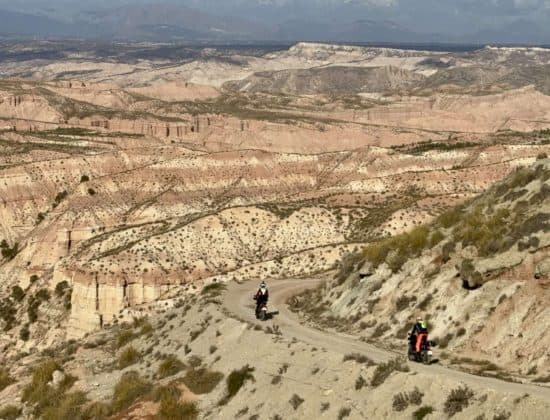 Adventure Touring
Ruta en moto off-road por Andalucía Oriental
Andalusia, Spain
6–11 nov · 6 days · Aries Moto Tours
€1,490 / person

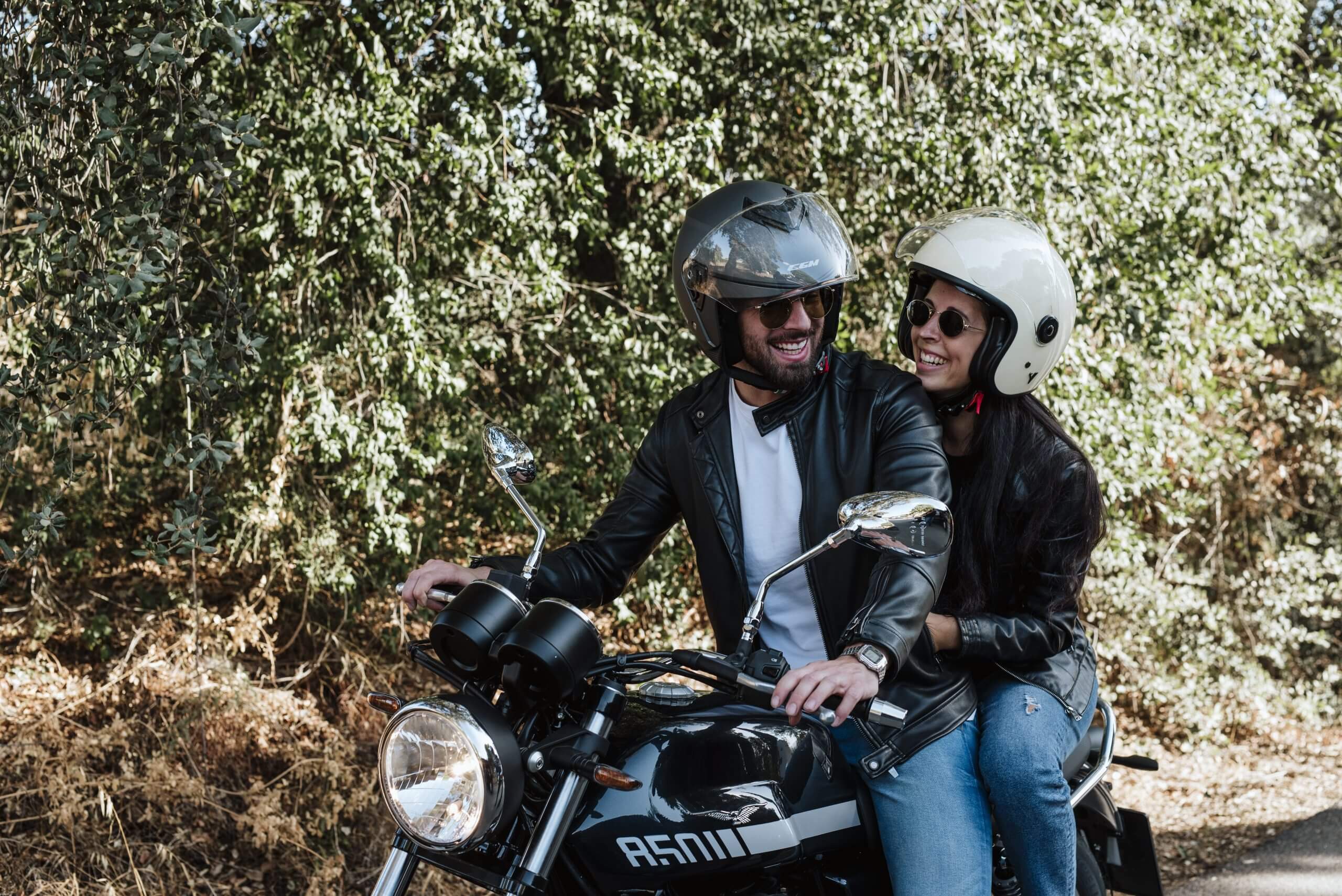 Road Touring
La ruta gourmet definitiva
Andalusia, Spain
Dates on request · 8 days · Gourmet Biker Tours
€4,366 / person
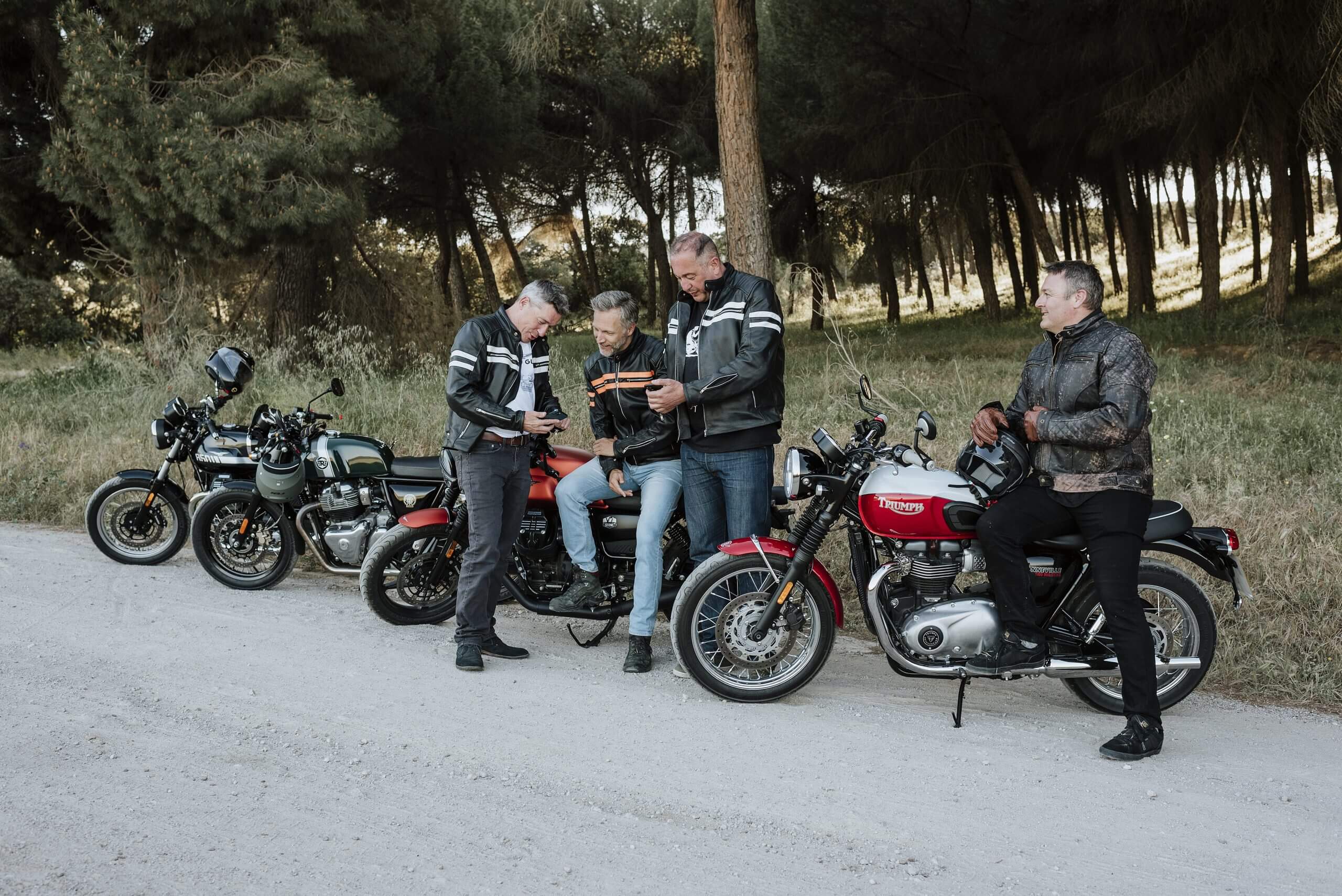 Road Touring
The Signature Gourmet Tour
Andalusia, Spain
Dates on request · 8 days · Gourmet Biker Tours
€3,021 / person

The drivers
Why motorcycle tour prices vary so much
Two week-long tours in the same country can differ in price by a factor of three, and the gap is almost always explained by four drivers. The first is format: a guided tour pays for a professional lead rider, a support vehicle and its driver, and the operator’s route-craft, while a self-guided package drops the guide and support crew, and a rental-only trip strips out everything but the bike. Same roads, very different cost bases.
The second is the destination’s cost floor. Fuel, hotels and restaurant meals in Iberia cost meaningfully less than the same items in the Alps or Scandinavia, and tours price accordingly — a week in Portugal simply carries lower on-the-ground costs than a week in Switzerland, whoever operates it. Third comes season: departures in the sweet-spot months command full price, while shoulder-season and winter-sun dates are often discounted even though the riding in places like Andalusia or the Canary Islands can be better than in high summer.
The final driver is the bike itself. Hire of a recent adventure or touring machine — with insurance, unlimited mileage and breakdown cover — is usually the single largest line item after the tour fee, and the model tier you choose moves the total more than any other decision. Riders bringing their own bikes trade that cost for ferries, fuel and wear on the ride down.
None of this makes any particular trip good or bad value — it makes them different products. The trick is to stop comparing headline prices and start comparing what the price contains, which is exactly what the next section is for.


The contents
What’s actually included in a motorcycle tour price
Reading an itinerary’s inclusions list is the closest thing touring has to reading a nutrition label, and the differences hide there. A full-service guided tour typically bundles accommodation, daily breakfasts and most dinners, luggage transfer in the support vehicle, the guide, route planning, and airport transfers — with the motorcycle either included or offered as a clearly priced hire option. Self-guided packages usually keep the hotels, breakfasts, GPS routes and support line, while meals beyond breakfast return to your own budget.
The items that most often sit outside the headline price are consistent across the industry: fuel, road tolls, lunches, drinks, entrance fees on rest days, travel insurance, and the damage excess on a hire bike. None of them are hidden — reputable operators list them explicitly — but they are easy to skim past when two trips are side by side and one looks cheaper. A lower headline with fuel, dinners and tolls excluded can cost more by the final evening than a higher all-inclusive price, which is why experienced riders read the exclusions list before they ever look at the number at the top of the page.
Two extra charges deserve special attention. First, the hire bike’s insurance excess: the amount you owe if the bike is damaged varies enormously, and some operators sell an excess-reduction option that is genuinely worth it on a two-week trip. Second, single-room supplements: twin-share is the default pricing on most tours, and the single supplement is the most commonly overlooked line on the invoice. Check both before comparing anything else.

The inclusion checklist
Run any two trips you’re comparing against the same list — value differences appear immediately.
- Accommodation standard and number of nights
- Meals: breakfasts only, or dinners too?
- Motorcycle hire, insurance, and the damage excess
- Support vehicle / luggage transfer (guided) or 24/7 line (self-guided)
- Airport transfers at both ends
- Fuel, tolls, and lunches — usually excluded
- Single-room supplement if travelling solo
The formats
Guided, self-guided or rental-only: the cost relationship
The three formats sit on a reliable cost ladder. Guided tours occupy the top rung because you are paying for people: the guide who rides ahead of you and the driver behind you are professionals on the road for your whole trip, and their expertise is the product. For a first tour in an unfamiliar country, that money buys the removal of every logistical unknown — which is exactly what many riders want to buy.
Self-guided packages typically come in meaningfully cheaper than the same operator’s guided version of the same route, because the hotels and route-craft remain while the staff costs disappear. You still get the pre-booked accommodation, the GPS tracks refined over years, detailed daily route notes, and a phone number that answers at midnight. For confident navigators, self-guided is the value sweet spot of the entire industry.
Rental-only is the budget floor: a bike, insurance, and total freedom. Everything else — route, hotels, contingencies — is your own work and your own risk. It suits experienced tourers who enjoy the planning as much as the riding, and it turns the cost conversation into a purely personal budget exercise.
A useful rule of thumb when comparing formats: price the trip per riding day, not per trip, and include the bike in every number. Day-rate comparisons expose padding (arrival and departure days that contain no riding) and make a six-day and an eight-day itinerary genuinely comparable. Exact day rates for every trip on this site are visible on the trip pages — the numbers there are live, which is precisely why this guide quotes none.


The judgement
How to compare motorcycle tours on value, not price
Once the inclusions are lined up, value judgement comes down to a handful of questions that headline prices never answer. How long has the operator run this exact route? An itinerary in its tenth season has had its hotels, lunch stops and road choices refined by a decade of rider feedback — that maturity costs nothing extra and is worth a great deal. What is the group size cap, and is it enforced? A twelve-bike ceiling is a different holiday from a twenty-bike convoy at the same price. What bike tier is actually included, and what does the upgrade cost — and, on the other side of the ledger, what is the damage excess if it goes wrong?
Then look at the calendar mathematics. Shoulder-season departures on identical itineraries are often the best value in touring: the same roads, thinner traffic, and softer pricing. Winter-sun destinations invert the logic — the Canary Islands in January, and Andalusia in spring and autumn, charge their strongest prices when northern Europe is cold because that is when they are most worth riding.
Finally, price the alternative honestly. A self-planned trip costs your own hours: route research, hotel booking, luggage logistics, and the contingency planning you will not need until you need it badly. Riders who enjoy that work should absolutely do it — our route-planning guide exists for exactly that — but comparing a package price against “just the hotels” without valuing the planning is how tours end up looking expensive and turn out not to be. Every trip page on this site lists its price and inclusions side by side, so the comparison this guide describes takes minutes, not evenings.
Budgeting a tour in four steps
Pick the format first
Guided, self-guided or rental-only sets your price band before any destination decision. Be honest about how much of the logistics you want to handle yourself — the format premium buys the removal of work, and it’s only worth paying for work you don’t want.
Compare inclusions, not headlines
Line up the inclusion lists of your shortlisted trips against the checklist above. Add the excluded items — fuel, tolls, lunches, single supplement — to each headline price so you’re comparing the real cost of the same week.
Decide the bike question
Hire (with its insurance and excess) versus riding your own machine down (ferries, fuel, tyres, days in the saddle). For a week in Iberia, flying and hiring usually wins on both time and total cost; for a month, your own bike starts to make sense.
Play the calendar
Shoulder-season departures are touring’s best-kept value secret — same route, quieter roads, softer price. Book early regardless: deposits are typically 20–25%, popular bike models and lowered options go first, and the balance isn’t due until 6–8 weeks before departure.
Frequently asked questions
The questions riders ask most before booking.
Keep reading

Beginner’s guide
Your First Motorcycle Holiday: The Complete Beginner’s Guide
Thinking about your first motorcycle holiday? This guide covers everything a first-timer needs — how to choose a beginner-friendly tour, what it costs, how booking works, and what the support around you actually looks like — so you can book with confidence.

Decision guide
Guided vs Self-Guided Motorcycle Tours: Which Should You Book?
Same roads, same hotels, very different holidays. Guided and self-guided motorcycle tours share most of their ingredients — the difference is who leads, who carries the luggage, and who decides. This guide compares the two formats honestly so you can book the one that matches the trip you actually want.
About the author
Ben Crawford
Co-founder
Ben Crawford is a co-founder of Motorcycle Holiday: a software nut by day and an adventure rider at heart. He builds the site that helps riders find the right tour.